Some observations do not begin with a telescope.
A few nights ago, the fireflies returned to the garden. Or perhaps more accurately: they revealed that they had never really left. Their light is easy to miss. It does not announce itself. It appears low above the grass, between shrubs and shadows, for a few seconds at a time — a quiet signal from the living night.
For me, this is one of the most beautiful signs that a garden is not only a place for humans. It is habitat. It is shelter, corridor, breeding ground, and dark refuge. Fireflies need more than a warm evening. They need darkness, undisturbed edges, pesticide-free ground, and a landscape that has not been tidied into biological silence.
Their presence matters.
As astronomers and astrophotographers, we often speak about darkness because we want to see the stars. We measure light pollution, search for dark sites, and wait for nights when the sky becomes transparent enough to reveal faint structures above us. But darkness is not only astronomical. It is ecological. It belongs to bats, moths, owls, hedgehogs, amphibians — and to fireflies.
A truly dark sky begins much closer to the ground than we sometimes think.
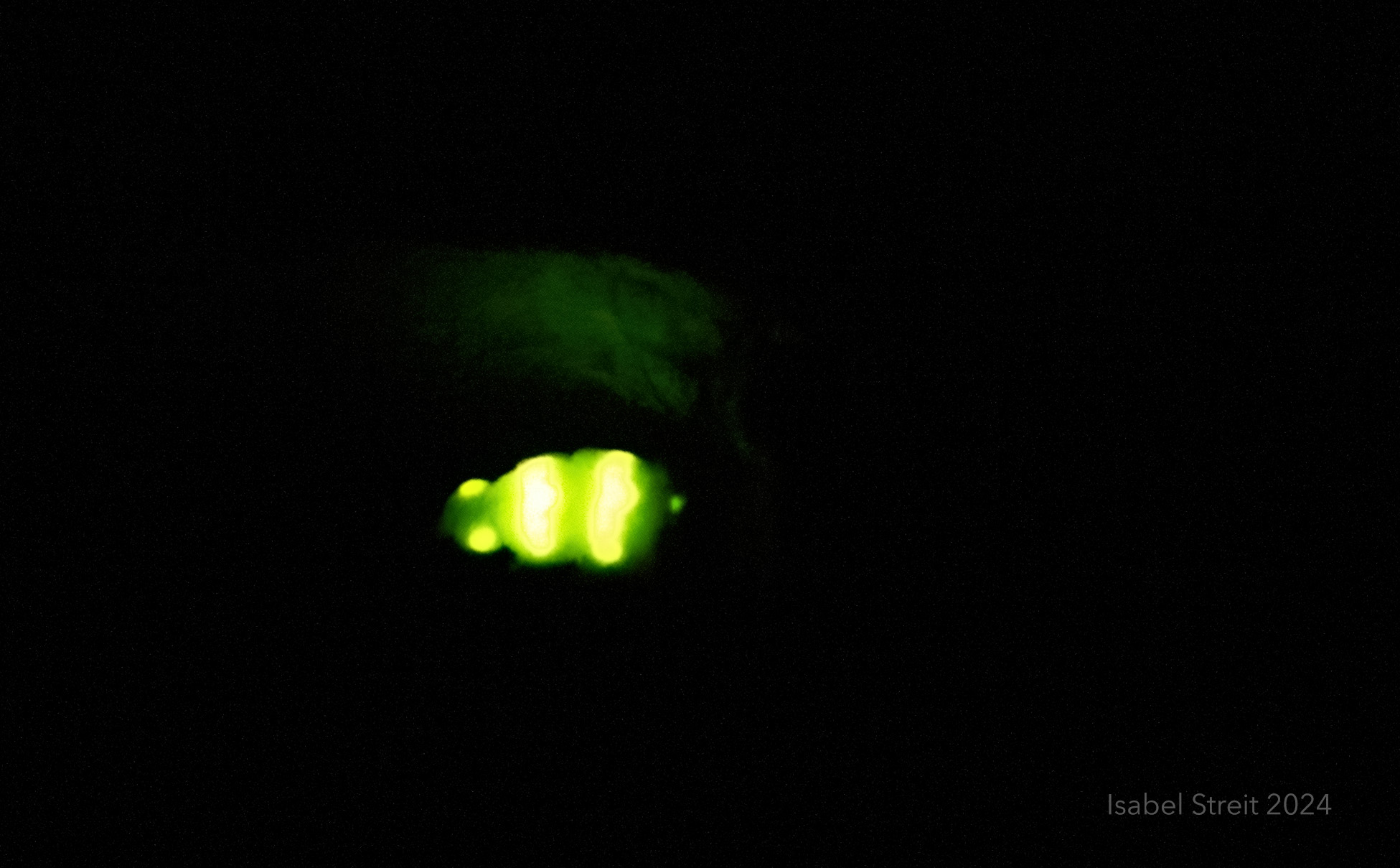
The photograph above was taken in 2024. It is not a record of this particular night. But that is exactly the point: the fireflies are still here. Their presence this summer is not only a small wonder. It is a reminder that carefully protected places can endure, and that the night garden is alive in ways that only become visible when we allow it to remain dark.
Not every light in the night belongs to the stars.